Websites Google understands
We design your site and build it to meet the criteria Google evaluates when it decides which results to show first.
- Optimized load speed
- WCAG accessibility
- Technical SEO included
A fast site is not a luxury. It is a ranking factor
Everything Google measures to decide which results come first, handled in the architecture of the project.
Mobile-first, 100% responsive
We design for mobile first and then scale up to tablet and desktop. Google indexes the mobile version of your site. If it fails there, it fails everywhere.
Core Web Vitals in the green
We optimize LCP, CLS and INP — the three metrics Google measures as page experience — in the architecture, not as a patch at the end of the project.
Semantic structure for SEO
A correct heading hierarchy, JSON-LD structured data, per-page metadata, canonical tags and a sitemap. All of it rendered on the server, so crawlers can read it without running JavaScript.
WCAG accessibility
Sufficient contrast, keyboard navigation, alternative text and ARIA labels where they are needed. An accessible site reaches more people, and Google favors it.
Custom code, no templates
No generic themes loaded with plugins you do not use. We build with Next.js and React: less weight, more control and a site that can keep growing.
SSL certificate and 24/7 availability
Hosting with a global CDN, HTTPS, backups and monitoring. Your site loads fast from any country and stays up when a campaign brings a spike in traffic.
Three technical decisions that determine whether your site gets found
None of them shows in the design and all three show in the traffic. They are made at the start of the project, while they still cost nothing.
Decision 1 of 3
The three metrics Google measures, with room to spare
LCP, INP and CLS are what Google uses to assess page experience, and they are field metrics: they are measured on real visits, not in a lab test. A site that meets them with room to spare holds up on the day a campaign brings a spike in traffic, and for the visitor who opens it on a slow connection.
- They are solved in the architecture of the project: sized images, preloaded fonts and nothing that pushes the content around while it loads.
- This site runs at an LCP of 1.4 s and a CLS of 0.002, measured with the PageSpeed Insights API.
- You can measure yours today with our AI readiness diagnostic for websites, which reads that same data.
Decision 2 of 3
The content arrives in the HTML, it is not assembled afterward
A site that is built in the browser serves an empty document and fills in the content once the JavaScript finishes running. A person sees the same page either way. A crawler does not always. We render on the server, so the text, the links and the forms are in the first response.
- This holds for Google and also for the crawlers behind ChatGPT, Perplexity and Claude, which do not run the bundle.
- The contact form is there even if the JavaScript fails, which is exactly when losing it costs the most.
- Every page is also served in markdown, so an agent can read it without HTML in the way.
Decision 3 of 3
Structured data states what each page is
Without markup, a search engine has to guess whether a page is a service, an article or a company profile. With JSON-LD you state it in a format that does not depend on how the text is written, and that is what produces the breadcrumb trail in the search result and what makes an answer engine cite your page instead of summarizing it.
- Organization, WebSite, Service, BreadcrumbList and FAQPage, generated on the server.
- The FAQ markup carries the same answer the visitor reads, not a separate version.
- The canonical tag, the sitemap and the metadata come from the same source, so they cannot contradict each other.
Published work, not mockups
These are sites in production, not design proposals. Each screenshot is of the live home page as it stands today, and the domain is below it in case you want to check.

Ditsa Integraditsaintegra.comPrivate security 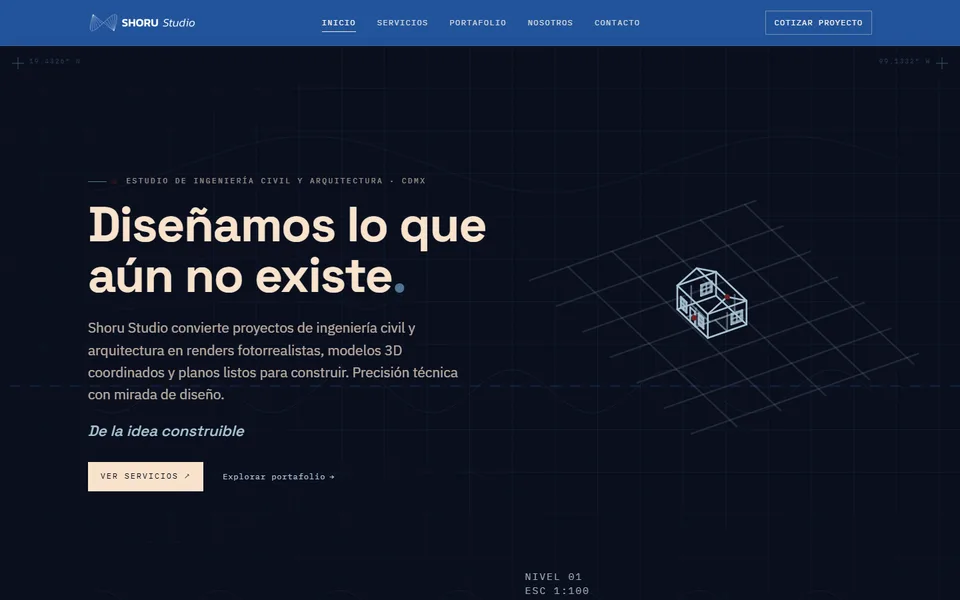
Shoru Studioshoru.studioReal estate and property developments 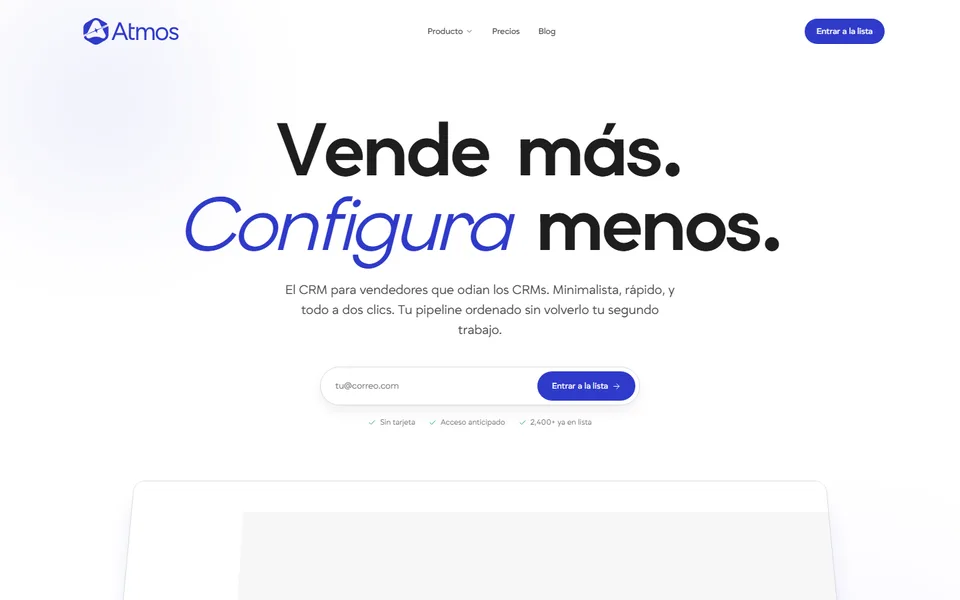
Atmosatmos.com.mxSoftware and SaaS
The right plan for your project
Three reference scopes, based on where your company is today. Pick the one closest to your case and we adjust the proposal from there.
Entrepreneurs
For those starting to build their presence
A compact site that makes your business visible and earns trust from the first visit: who you are, what you offer and how to reach you, with domain, hosting and SSL certificate already handled. It ships fast, loads fast and is ready to rank for searches in your category. It is the starting point for no longer depending on social media alone.
Request a quote- Most popular
SMBs
For companies that already sell and want to grow
The site stops being a brochure and starts working: more pages to cover each service, landing pages for your campaigns and forms connected to your CRM so no lead is lost. It includes in-depth SEO optimization and a content manager your team uses to publish without depending on us. This is the level where the site starts generating opportunities on its own.
Request a quote Enterprise
For operations with several teams and product lines
Architecture designed for large catalogs, several business lines and teams publishing in parallel, with role-based permissions and approval workflows. We integrate the site with your CRM, your ERP and your analytics tools, and we add chat, heatmaps and monitoring so decisions are made with data. Priority support and ongoing guidance as the site evolves.
Request a quote
Every project is quoted for its own scope, page count and integrations. The proposal is fixed: no variable costs halfway through.
From strategy to launch without losing rankings
Four stages with reviews in between. Nothing is built without being approved first.
- 01
Strategy and architecture
1 weekWe define who the site speaks to, what it has to achieve and how the information is organized. We research the keywords in your category that carry real purchase intent.
- 02
Design
2–3 weeksWe prototype page by page, mobile first. We review it with you before writing a line of code, while changing something is still inexpensive.
- 03
Development
2–4 weeksWe build with Next.js: server-side rendering, images optimized automatically and deployment to a global CDN. Technical SEO is implemented here, not afterward.
- 04
Measurement and launch
1 weekWe connect analytics and Search Console, verify Core Web Vitals with real data, submit the sitemap and publish with the redirects needed to avoid losing rankings.
Frequently asked questions about websites
How much does a website cost?
Every project is quoted individually, based on the number of pages, whether a blog or a catalog is needed, the integrations required and whether existing content has to be migrated. Tell us the scope and we send you a fixed proposal, with no variable costs halfway through the project.
How long does the project take?
A five-page site usually takes 4 to 6 weeks from approval of the proposal. A fifteen-page site with landing pages takes 8 to 10. What stretches the timeline most is almost always content delivery and internal approvals on the client side.
Will the site rank on Google?
We deliver the site with the technical side resolved: speed, semantic structure, structured data, sitemap and metadata. That is the necessary foundation, but ranking also depends on content published consistently and on the authority of the domain, and both are built over time.
Can I edit the content myself?
Yes. We set up a content manager for the sections that change often and we train you to use it. The structures and the design stay protected, so an edit cannot break the site.
What happens to my current site and its URLs?
Before launch we map every existing URL and set up 301 redirects to the new ones. It is the step most often skipped when a site is rebuilt, and the one that costs the most organic traffic.
Does it include hosting and a domain?
The plans include a domain and hosting for the first year. From the second year they renew separately. If you prefer to manage them in your own account, we can deploy there instead.
Ready to grow?
Tell us what your site needs
Describe your project and we send you a proposal with scope, timeline and investment in less than 48 business hours.
Or email us directly at contacto@c2suite.com